

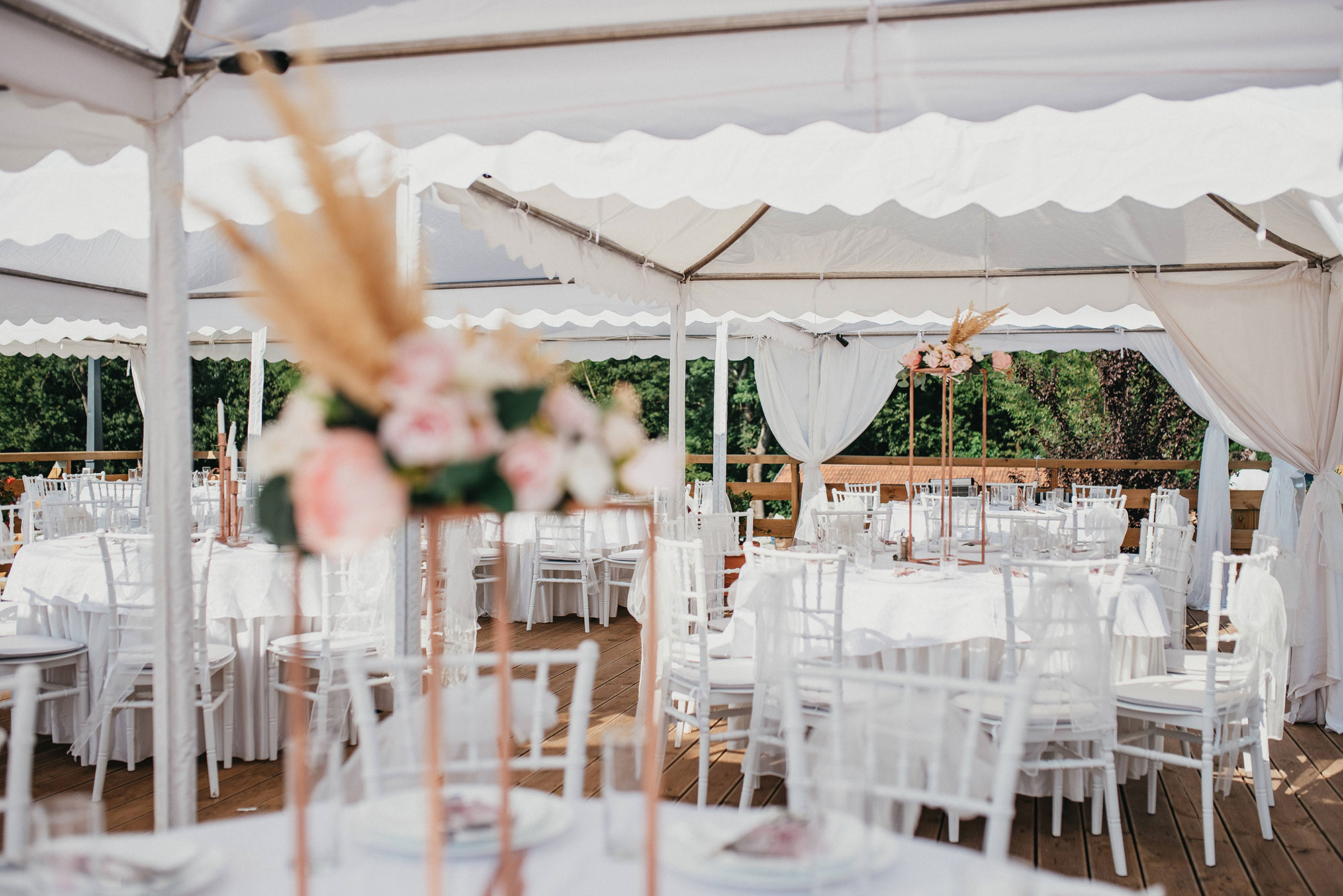
Seating arrangements are often one of the more sensitive parts of wedding planning. Deciding where guests should sit involves far more than filling your tables. Personal and social dynamics, important groups, guest comfort and venue layout all play a role in creating a seating chart that works for everyone.
Thoughtful placement ensures guests (and by extension, the couple) feel relaxed, while keeping the reception running smoothly and on schedule. The space, including table configuration and dining, bar, and dance floor locations, matters significantly and can impact seating arrangements.
Rich’s Catering & Special Events helps couples navigate these decisions as part of planning their wedding. From choosing the right reception layout to creating an experience that works for the couple and their guests, their experienced events team helps bring all the details together.
When Should You Make Your Wedding Seating Chart?
A wedding seating chart is typically one of the later wedding planning tasks. You can start thinking about your seating strategy earlier, but it’s best to wait until RSVPs are received and your guest list is all but finalized before assigning guests to specific tables.
RSVPs tell you:
- Final guest count, aside from any last-minute changes
- Which guests are bringing a plus-one
- Which children will be attending, if permitted
- Which invitees declined
- Dietary restrictions or accessibility needs that could affect seating
Once the RSVP deadline has passed, leave enough time to finalize the seating chart and review the arrangement with your venue or events team. Importantly, you’ll also need to ensure that you have ample time to create your seating display with escort cards, place cards, and/or accompanying favors.
Wedding Seating Chart Tips
Wedding seating chart etiquette is less about following a strict set of rules and more about finding arrangements that make sense for your guests and your reception. Family dynamics, friendships, wedding party relationships and the venue itself can all affect who sits where at a wedding reception, so there isn’t one right setup for every couple.
Organize the Guest List
Before assigning anyone to a table, take some time to understand who you’re working with. Start by breaking the guest list into groups such as:
- Immediate family
- Extended family
- Wedding party
- Friends
- Coworkers
- Family friends
- Other groups with existing connections
Identify spouses and partners so couples aren’t accidentally separated. The same goes for plus-ones and young children, who should generally be seated with the person they came with and their parents, respectively.
It’s helpful to plan out this step visually. Use different-colored sticky notes for different groups, arrange guests into groups in a spreadsheet or use another system that lets you easily move people around as you build the chart.
Review the Floor Plan
Before deciding who sits where at a wedding reception, take a close look at the venue’s floor plan. The space dictates how many guests can sit comfortably, which table configurations are possible and where key parts of the reception are located.
Consider:
- How many tables can comfortably fit in the space
- Which table sizes and shapes work best
- How many guests can sit at each table
- Where the couple will sit
- Where the dance floor, bar and dining areas will be located
- Where the DJ, band or other entertainment will be positioned
Be sure to leave enough space for both guests and staff to move comfortably between tables and avoid trying to squeeze in additional seating at the expense of the overall flow of the room.
The floor plan should also account for individual guest needs. Guests with mobility concerns may be more comfortable near an entrance or restroom, while guests who are sensitive to noise may prefer to sit farther from speakers or other louder areas.
Rich’s Catering & Special Events has extensive experience helping couples seat their guests in a way that fits their headcount and priorities as well as the overall guest experience.
Consider the Guest Experience
Once you know who is attending and how the room will be arranged, think about how guests will actually experience the reception from their tables. Good seating considers who will enjoy spending time together and where certain guests need or prefer to sit.
Guests who already know one another are natural tablemates, but don’t feel obligated to keep every group together. Consider guests who may not know many people and look for connections that could make them feel more at ease, whether that’s a shared interest, mutual friend or similar personality.
Conversation matters, too. A mix of personalities can sometimes create a more engaging table, while a group of close friends may naturally carry the conversation themselves. At the same time, don’t separate guests who would be more comfortable sitting together simply to follow a particular seating arrangement.
Choose a Wedding Party Layout
There are a couple of popular ways to approach wedding party seating at the reception.
Sweetheart Table
A sweetheart table seats just the couple. It gives the newlyweds a more private place to eat and can make the rest of the seating chart easier to arrange. This layout is practical when the wedding party is large, or several members will be attending with partners who are not in the party.
Head Table
A traditional head table seats the couple with members of the wedding party. It keeps the wedding party together and creates a central gathering point for the people who played an important role in the couple’s wedding. A long head table requires a lot of space, so the venue’s floor plan should be considered before choosing this option. This becomes even more true if the couple intends to seat partners at the head table with members of the wedding party.
Plan for Family Seating
When deciding how to seat family at a wedding reception, first consider which family members the couple wants nearby and where each person will be most comfortable.
Parents traditionally sit at a table near the couple, but they don’t have to share a table if doing so would create an uncomfortable situation. They may also prefer to sit with close friends or other relatives. Siblings may naturally fit at a family table, but they can also sit with friends or members of the wedding party.
Grandparents and older relatives may benefit from a quieter location with easy access to restrooms or entrances. For families with young children, keeping children with their parents will likely make the reception more pleasant for everyone. Older children may have more flexibility to sit with siblings, cousins or friends depending on their age and the type of reception.
Family dynamics may require additional consideration. Divorced or separated parents don’t need to share a table simply because it’s traditional, and blended families may have several relationships to account for when deciding who sits where. The goal is to create an arrangement that respects those relationships rather than forcing everyone into a traditional family table.
Ensure Seating Charts are Easy to Follow
Once you’ve decided who sits where, make sure guests can easily find their table (and potentially their assigned seat) when they arrive. There are several ways to show guests where they’re seated, including:
- A large seating chart or display board
- Escorts that direct guests to their table
- Place cards that identify a specific seat
- Table numbers or names displayed at each table
Whatever format you choose, make sure the information is easy to read and matches the physical room setup. Before the wedding, double-check that:
- Every attending guest has a seat
- Names are spelled correctly
- Couples and families are accounted for
- Table numbers or names match the seating display
- The seating display matches the final floor plan
Leave Room for Last-Minute Changes
Even after RSVPs have been received and the seating chart is finalized, changes can still happen. Guests may cancel unexpectedly, a plus-one situation may change or other circumstances may affect the final guest count.
For that reason, avoid treating the seating chart as completely set in stone too early. Keep a digital version that can be adjusted easily and wait to print seating displays or place cards until you’re reasonably sure the arrangement is final.
If changes do happen close to the wedding, look for simple adjustments rather than rebuilding the entire chart. Moving one or two guests to another table may be enough to keep the arrangement balanced.
Be sure to communicate any significant last-minute changes to your venue and events team as well. The final seating arrangement can affect table setup, guest count and food and beverage service, so everyone working on the reception should have the most up-to-date information.
Plan Your Wedding with Rich’s Catering & Special Events
A seating chart is just one of many details that need to come together before your wedding day. Working with an experienced events team can make it easier to consider how your guest list, seating arrangement and reception space will work together.
Rich’s Catering & Special Events hosts weddings at several Buffalo-area venues, including:
- The Atrium
- The Powerhouse
- The Legacy at Eighteen Mile Creek
- The Bank
- Buffalo AKG Museum
With experience hosting weddings across these distinct venues, the Rich’s Catering & Special Events team understands how different spaces can accommodate guest counts, layouts and reception styles. They can help couples think through practical considerations such as table placement, guest flow, accessibility and food and beverage service while creating a reception that fits what they have in mind.